5 Lessons From a Decade of Rural Development Work
Transforming villages isn’t about quick fixes—it’s about empowering people, building partnerships, and creating sustainable change.
For more than a decade, rural development initiatives have shown that meaningful progress comes from understanding local needs and working hand in hand with communities. Every village has its own strengths, challenges, and aspirations. Sustainable development begins when people are empowered to become active participants in shaping their own future.
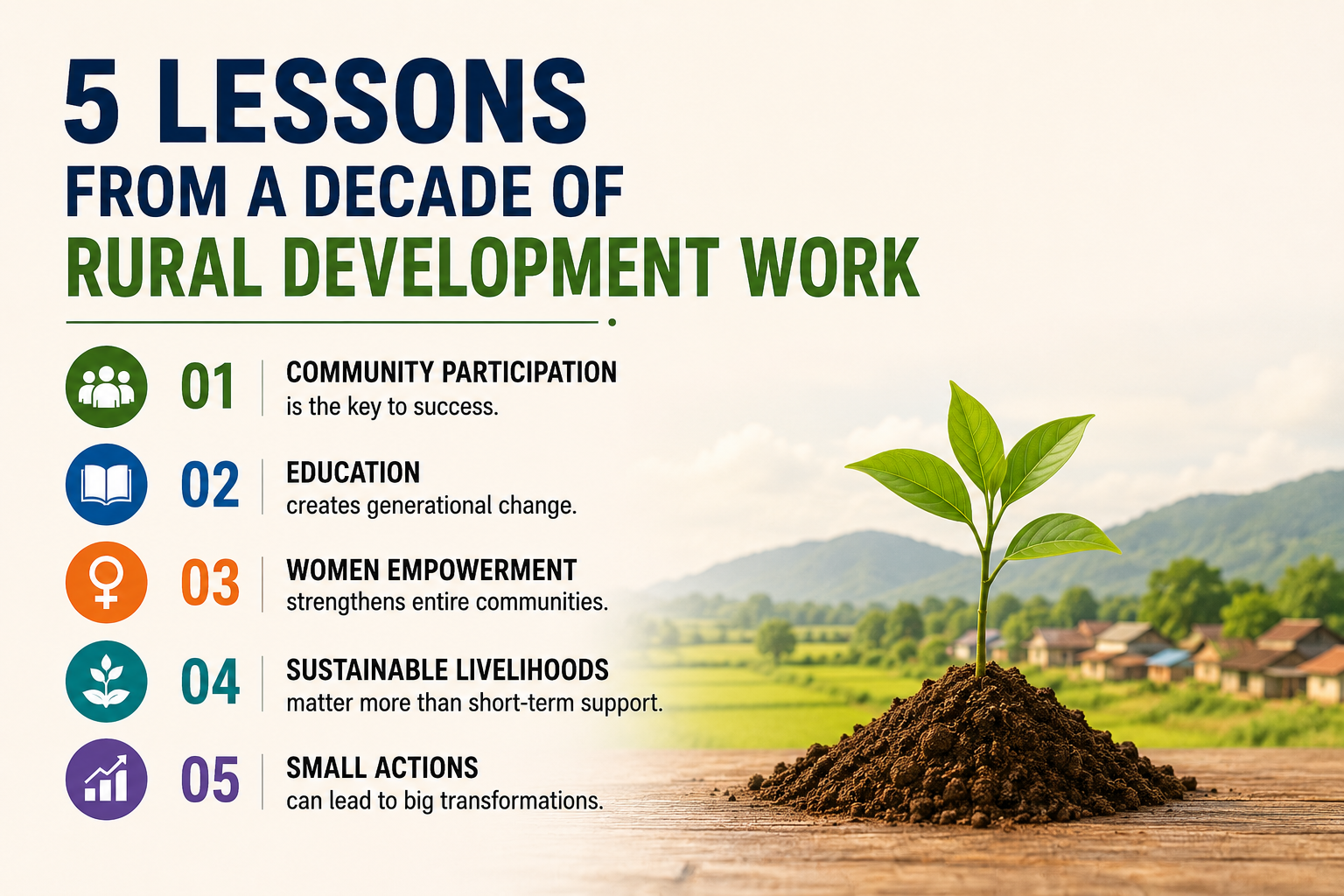
Here are five important lessons learned from years of working alongside rural communities.
1. Community Participation is the Key to Success
The most successful development projects are those where local communities actively participate in planning, implementation, and decision-making.
When villagers take ownership of projects, they become long-term custodians of the change. Whether it’s building sanitation facilities, improving schools, promoting agriculture, or organizing health camps, community involvement ensures sustainability long after the project is completed.
Lesson: Development succeeds when people are partners, not just beneficiaries.
2. Education Creates Generational Change
Education is one of the most powerful investments in rural development. Beyond literacy, quality education equips children and youth with the knowledge, confidence, and skills needed to break the cycle of poverty.
Scholarships, career guidance, digital education, and skill development programs help students unlock opportunities that can transform entire families.
Lesson: Educating one child creates opportunities for generations to come.
3. Women Empowerment Strengthens Entire Communities
When women gain access to education, vocational training, financial literacy, and entrepreneurial opportunities, entire communities benefit.
Women invest in their families, children’s education, healthcare, and local economic growth. Supporting women-led enterprises and self-help groups creates stronger and more resilient rural economies.
Lesson: Empowering women is one of the fastest ways to accelerate community development.
4. Sustainable Livelihoods Matter More Than Short-Term Support
Providing temporary assistance can solve immediate problems, but creating sustainable livelihood opportunities leads to long-term prosperity.
Training farmers in agri-allied businesses, supporting entrepreneurship, promoting skill development, and improving market access help families become financially independent.
When people earn with dignity, communities become more resilient and self-reliant.
Lesson: Sustainable income creates lasting impact.
5. Small Actions Can Lead to Big Transformations
Meaningful change doesn’t always require massive investments. A scholarship, a vocational training program, a health awareness camp, or a small donation can create ripple effects that improve countless lives.
Every volunteer, donor, partner, and community member contributes to a larger mission of building stronger, healthier, and more prosperous villages.
Lesson: Lasting change begins with one small step.
Looking Ahead
The journey of rural development continues to evolve with changing needs and new opportunities. By embracing innovation, collaboration, and community-driven solutions, we can create villages where every individual has access to education, healthcare, employment, and a better quality of life.
At Utkarsh Mission, we remain committed to empowering rural communities through education, women empowerment, skill development, healthcare, sustainable livelihoods, and social welfare initiatives.
Together, we can build stronger villages, empower future generations, and create a more inclusive and sustainable tomorrow.